Buy forex-factory.eu ?
We are moving the project
forex-factory.eu .
Are you interested in purchasing the domain
forex-factory.eu ?
domain@kv-gmbh.de · 0541-91531010
Buy forex-factory.eu ?
Which countries have a free market economy?
Some countries that have a free market economy include the United States, Canada, Australia, and the United Kingdom. These countries have minimal government intervention in their economies, allowing for private ownership of businesses and resources, as well as free trade and competition. In a free market economy, prices are determined by supply and demand, and individuals have the freedom to make their own economic choices. **
In which countries is there a social market economy? In which countries is there a free market economy? In which countries is there a planned economy?
Countries that have a social market economy include Germany, Sweden, and the Netherlands. These countries combine elements of both capitalism and socialism to ensure social welfare and economic stability. Countries that have a free market economy include the United States, Singapore, and Hong Kong. In these countries, the government plays a minimal role in regulating the economy, allowing market forces to determine prices, production, and distribution of goods and services. Countries that have a planned economy include North Korea, Cuba, and Venezuela. In these countries, the government controls all aspects of the economy, including production, distribution, and pricing of goods and services. **
Similar search terms for How-Countries-Go-Broke
Top-Angebote
Products related to How-Countries-Go-Broke:
-
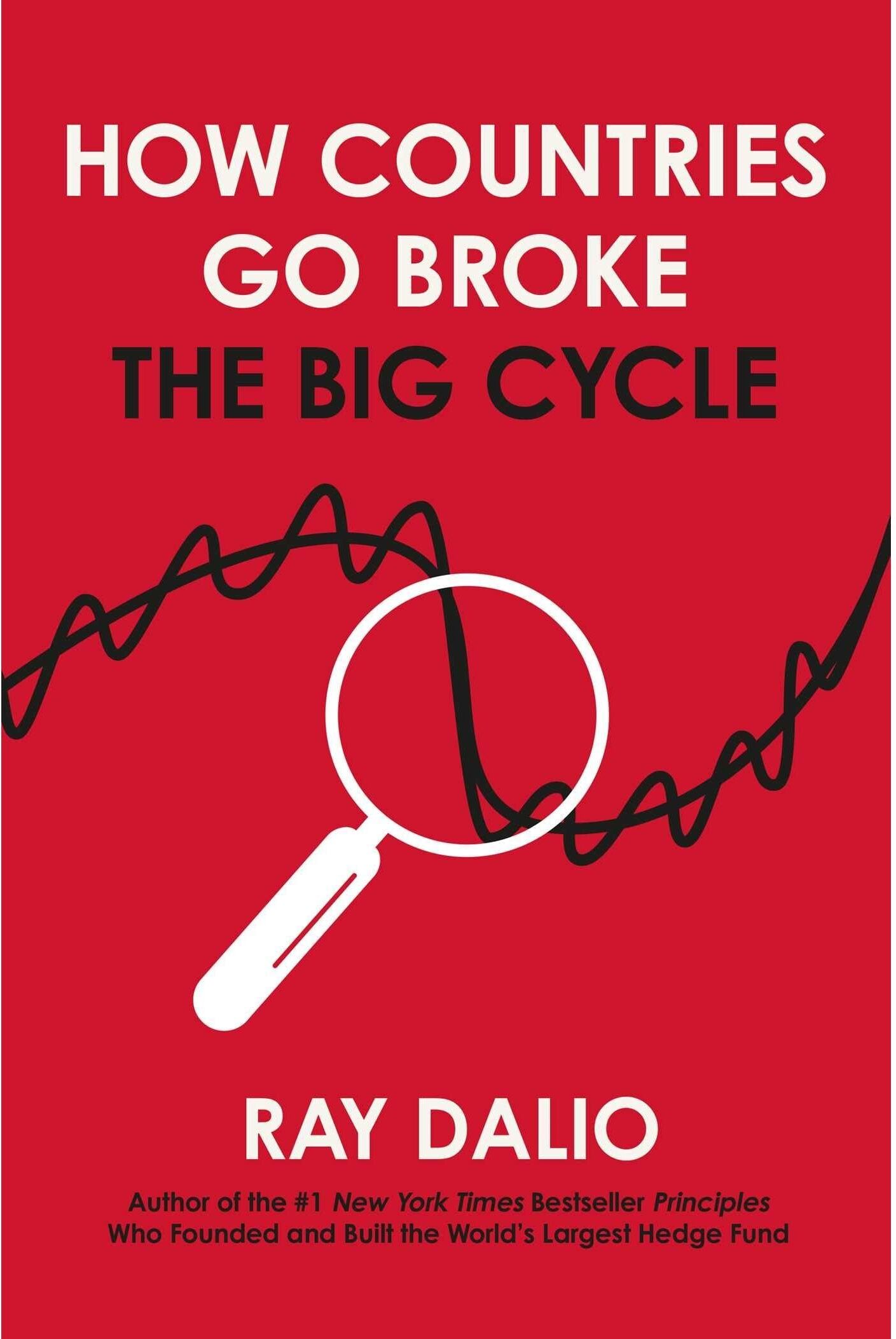
How Countries Go Broke Principles for Navigating the Big Debt Cycle, Where We Are Headed, and What We Should Do by Ray Dalio - Non Fiction - Hardback Simon & SchusterDo big government debts threaten our collective well-being? Are there limits to debt growth? Can a big, important reserve currency country like the United States really go broke – and what would that look like? For decades, politicians, policymakers and investors have debated these questions, but the answers have eluded them. In this groundbreaking book, Ray Dalio, one of the greatest investors of our time who anticipated the 2008 global financial crisis and the 2010–12 European debt crisis, shares for the first time his detailed explanation of what he calls the 'Big Debt Cycle'. Understanding this cycle is critical for helping policymakers, investors and the general public grasp where we are and where we are headed with the debt issue. Dalio's model points toward surprisingly straightforward solutions for dealing with the debt problems that the US, Europe, Japan and China face today. How Countries Go Broke also shows how these debt problems are related to the other forces – political within countries, geopolitical between countries, natural (droughts, floods and pandemics) and technological (most importantly, AI) – that together are causing what Dalio calls the 'Overall Big Cycle' changes in the world order. By reading this book, you will improve your understanding of what's happening now and what to do about it.15,99 £*Shipping: 2,99 £Secure redirect to the provider
-
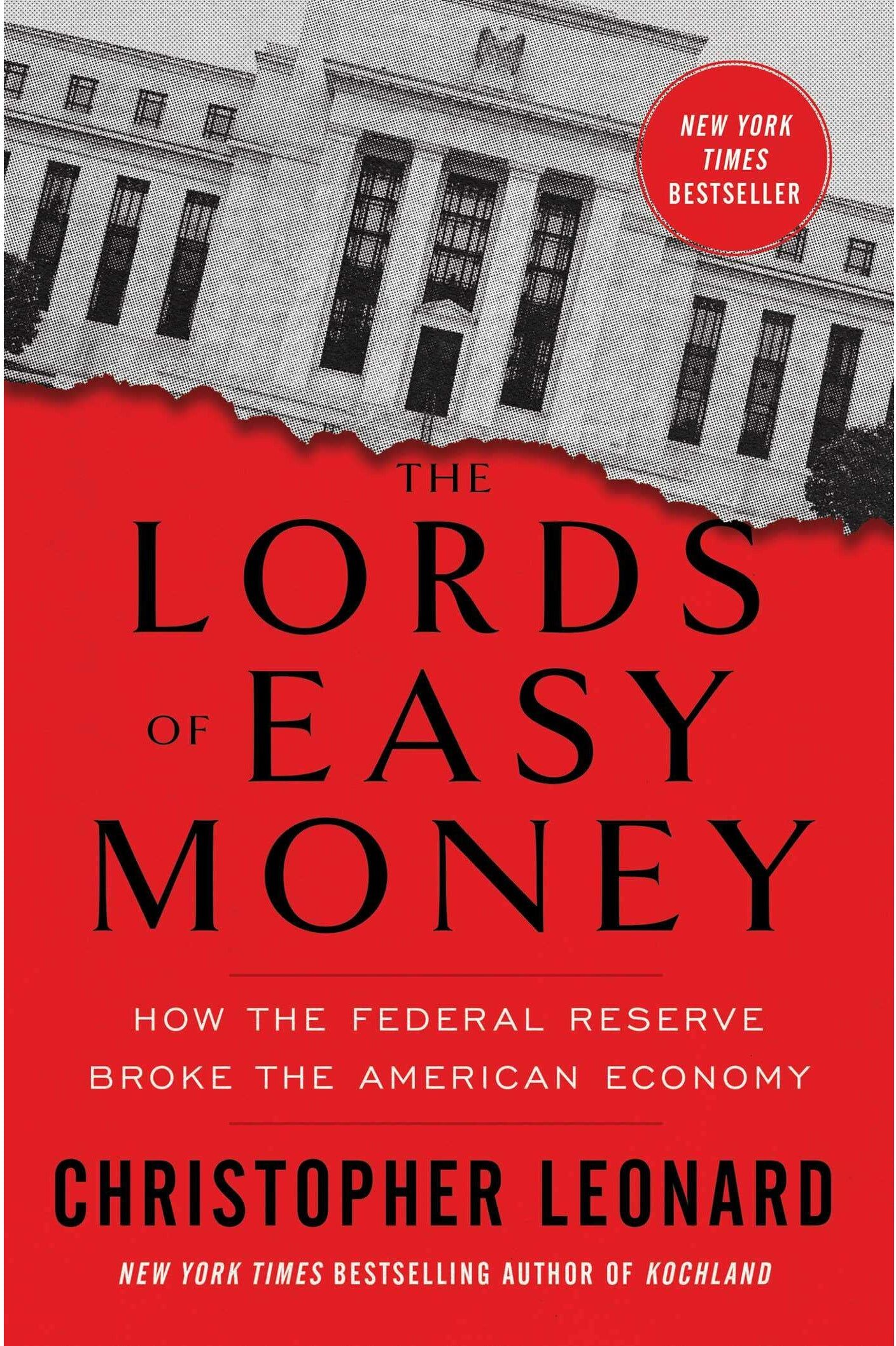
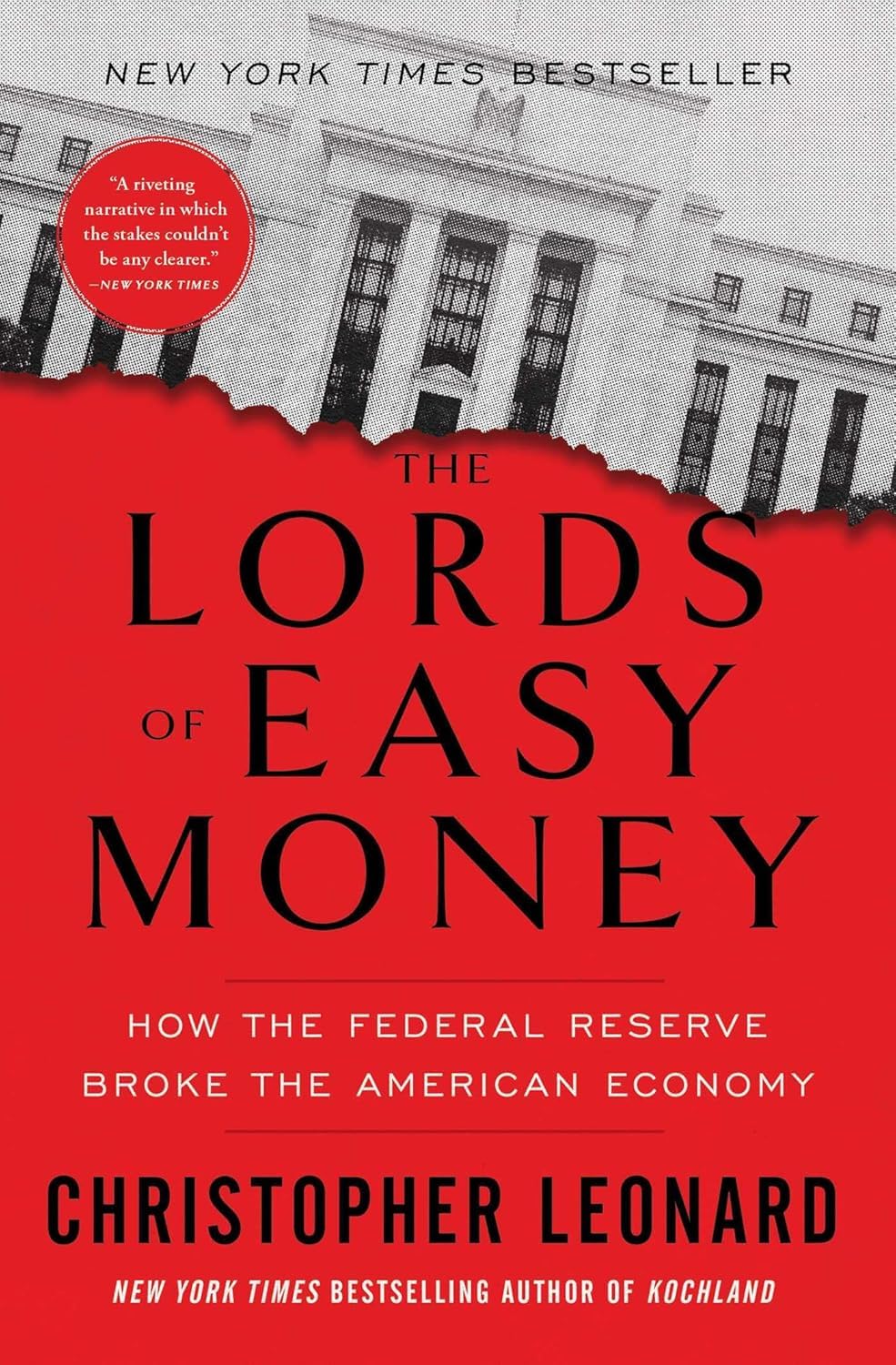
Simon & Schuster The Lords of Easy Money : How the Federal Reserve Broke the American Economy by Christopher LeonardIf you asked most people what forces led to today’s unprecedented income inequality and financial crashes, no one would say the Federal Reserve. For most of its history, the Fed has enjoyed the fawning adoration of the press. When the economy grew, it was credited to the Fed. When the economy imploded in 2008, the Fed got credit for rescuing us.But the Fed also has a unique power to reshape the American economy for the worse, which it did, fatefully, on November 4, 2010 through a radical intervention called quantitative easing. In just a few short years, the Fed more than quadrupled the money supply with one goal: to encourage banks and other investors to extend more risky debt. Leaders at the Fed knew that they were undertaking a bold experiment that would produce few real jobs, with long-term risks that were hard to measure. But the Fed proceeded anyway...and then found itself trapped. Once it printed all that money, there was no way to withdraw it from circulation. The Fed tried several times, only to see market start to crash, at which point the Fed turned the money spigot back on. That’s what it did when COVID hit, printing 300 years’ worth of money in two short months.Which brings us to now: Ten years on, the gap between the rich and poor has grown dramatically, stock prices are trading far above what’s justified by actual corporate profits, corporate debt in America is at an all-time high, and this debt is being traded by big banks on Wall Street, leaving them vulnerable—just as they were during the mortgage boom. Middle-class wages have barely budged in a decade, and consumers are buried under credit card debt, car loan debt, and student debt.The Lords of Easy Money tells the shocking, riveting tale of how quantitative easing is imperiling the American economy through the story of the one man who tried to warn us. This will be the first inside story of how we really got here—and why we face a frightening future.4,99 £*Shipping: 1,99 £Secure redirect to the provider
-
Simon & Schuster UK The Lords of Easy Money: How the Federal Reserve Broke the American Economy by Christopher Leonard - New Paperback - Business & EconomicsInvestigative journalist Christopher Leonard examines the Federal Reserve's monetary experiments in 'The Lords of Easy Money'. This non-fiction paperback explores how the Fed's policies have reshaped the American economy, widening inequality and inflating asset bubbles. Leonard's account, told through the eyes of an insider who tried to sound the alarm, provides essential reading for understanding today's economic instability. The book delves into the Fed's use of quantitative easing from the 2008 crash through the COVID-19 pandemic, revealing the unintended consequences of this policy. Published by Simon & Schuster UK, this book is a thought-provoking analysis of the American economy and its future.3,99 £*Shipping: 2,99 £Secure redirect to the provider
-
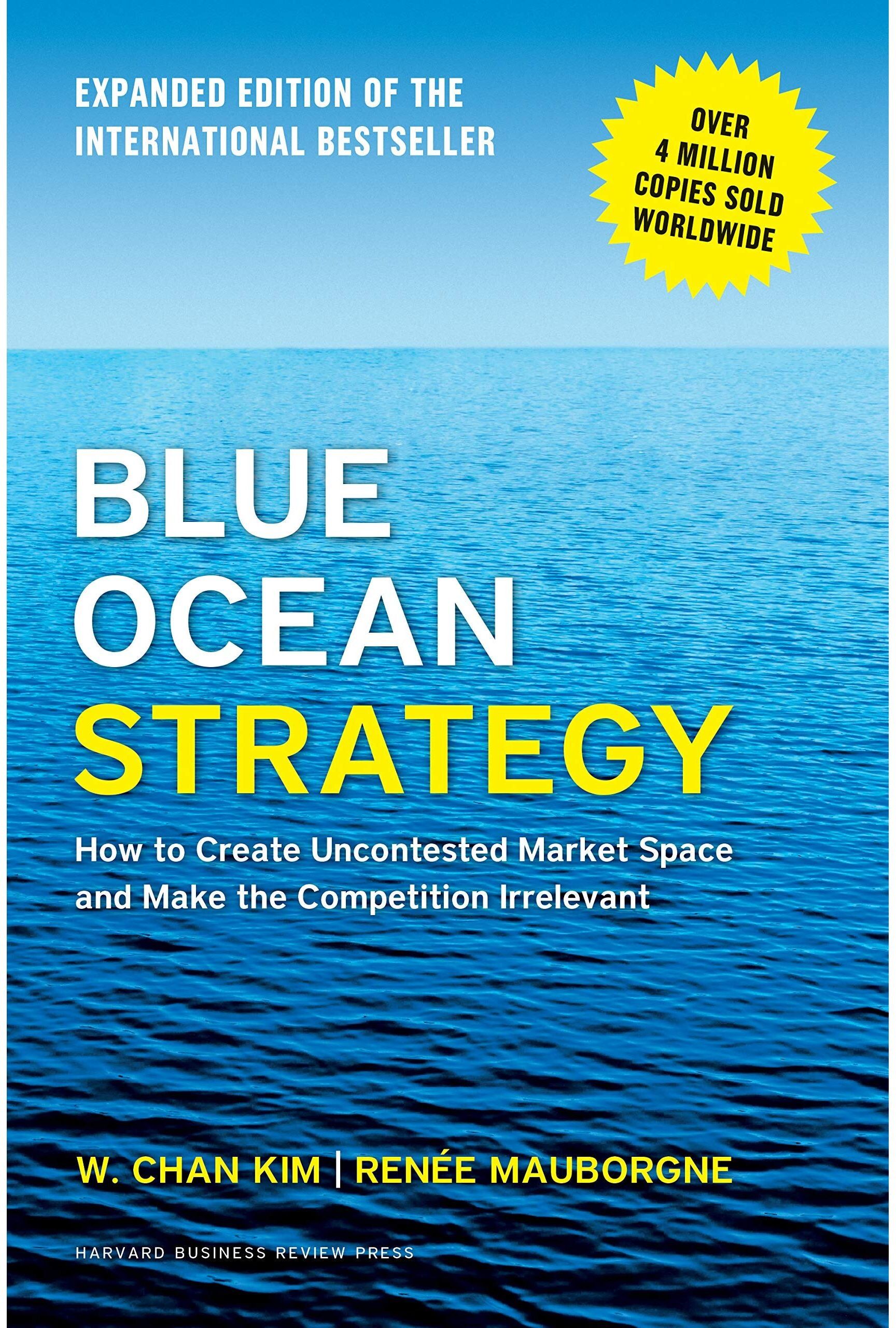
Harvard Business Review Press Blue Ocean Strategy, Expanded Edition: How to Create Uncontested Market Space and Make the Competition IrrelevantThe global phenomenon that has sold over 4 million copies, is published in a record-breaking 49 languages and is a bestseller across five continents—now updated and expanded with new content. Named by Fast Company as one of the most influential leadership books in its Leadership Hall of Fame. A strategy classic. In this perennial bestseller, embraced by organizations and industries worldwide, globally preeminent management thinkers W. Chan Kim and Renée Mauborgne challenge everything you thought you knew about the requirements for strategic success. Recognized as one of the most iconic and impactful strategy books ever written, BLUE OCEAN STRATEGY, now updated with fresh content from the authors, argues that cutthroat competition results in nothing but a bloody red ocean of rivals fighting over a shrinking profit pool. Based on a study of 150 strategic moves (spanning more than 100 years across 30 industries), the authors argue that lasting success comes not from battling competitors but from creating "blue oceans"—untapped new market spaces ripe for growth. BLUE OCEAN STRATEGY presents a systematic approach to making the competition irrelevant and outlines principles and tools any organization can use to create and capture their own blue oceans. This expanded edition includes: A new preface by the authors: Help! My Ocean Is Turning Red Updates on all cases and examples in the book, bringing their stories up to the present time Two new chapters and an expanded third one—Alignment, Renewal, and Red Ocean Traps—that address the most pressing questions readers have asked over the past 10 years A landmark work that upends traditional thinking about strategy, this bestselling book charts a bold new path to winning the future. Consider this your guide to creating uncontested market space—and making the competition irrelevant. To learn more about the power of BLUE OCEAN STRATEGY, visit blueoceanstrategy.com. There you'll find all the resources you need—from ideas in practice and cases from government and private industry, to teaching materials, mobile apps, real-time updates, and tips and tools to help you make your blue ocean journey a success.14,99 £*Shipping: 2,99 £Secure redirect to the provider
-
Why is it called "go woke go broke"?
The phrase "go woke go broke" is used to suggest that companies or individuals who embrace progressive or social justice causes will suffer negative financial consequences as a result. The term "woke" refers to being aware of social and political issues, often associated with progressive or liberal viewpoints. The phrase implies that by aligning with these causes, a company or individual will lose customers or face financial hardship. It is often used by critics of social justice movements to dismiss or discredit their impact. **
-
In which countries is there a social market economy in all EU countries?
A social market economy is a model that combines a free-market capitalist system with social policies to ensure fair competition and social welfare. This model is prevalent in all European Union (EU) countries, as it is a key principle of the EU's economic policies. Therefore, all EU countries can be considered to have a social market economy to varying degrees, with each country implementing its own specific policies and regulations to balance economic growth with social welfare. **
-
How do you go from backlink analysis to SEO strategy?
After conducting a backlink analysis, the next step is to identify the high-quality and relevant backlinks that are contributing to the website's authority and rankings. Once these backlinks are identified, the SEO strategy can be tailored to focus on acquiring similar high-quality backlinks from authoritative and relevant websites. This may involve outreach to relevant websites for guest posting opportunities, creating valuable content that naturally attracts backlinks, and optimizing the website's internal linking structure to maximize the impact of existing backlinks. Additionally, the SEO strategy may also involve disavowing low-quality or spammy backlinks that could be harming the website's rankings. **
-
In how many countries is factory farming banned, or in which countries is factory farming banned?
Factory farming is banned in several countries around the world, including Austria, Germany, Switzerland, and Sweden in Europe. Additionally, New Zealand and some states in Australia have also implemented bans or restrictions on factory farming practices. These countries have taken steps to improve animal welfare and reduce the negative environmental impacts associated with intensive farming methods. However, it's important to note that the specific regulations and restrictions on factory farming can vary by country and region. **
In how many countries is factory farming prohibited or in which countries is factory farming prohibited?
Factory farming is prohibited in several countries around the world, including Austria, Denmark, Germany, Sweden, Switzerland, and the Netherlands. These countries have implemented laws and regulations to restrict or ban certain intensive farming practices in order to improve animal welfare standards. Additionally, some regions within countries like the United States and Australia have also implemented restrictions on factory farming practices. **
Where does society go when Europe's economy has completely failed, and which countries are good emigration countries in the future?
When Europe's economy has completely failed, society may face significant challenges such as high unemployment, poverty, and social unrest. In such a scenario, individuals may consider emigrating to countries with stable economies and better opportunities for employment and quality of life. Countries like Canada, Australia, New Zealand, and the United States are often considered good emigration options due to their strong economies, diverse job markets, and high standards of living. These countries also have well-established immigration systems that welcome skilled workers and professionals from around the world. **
Top-Angebote
Products related to How-Countries-Go-Broke:
-
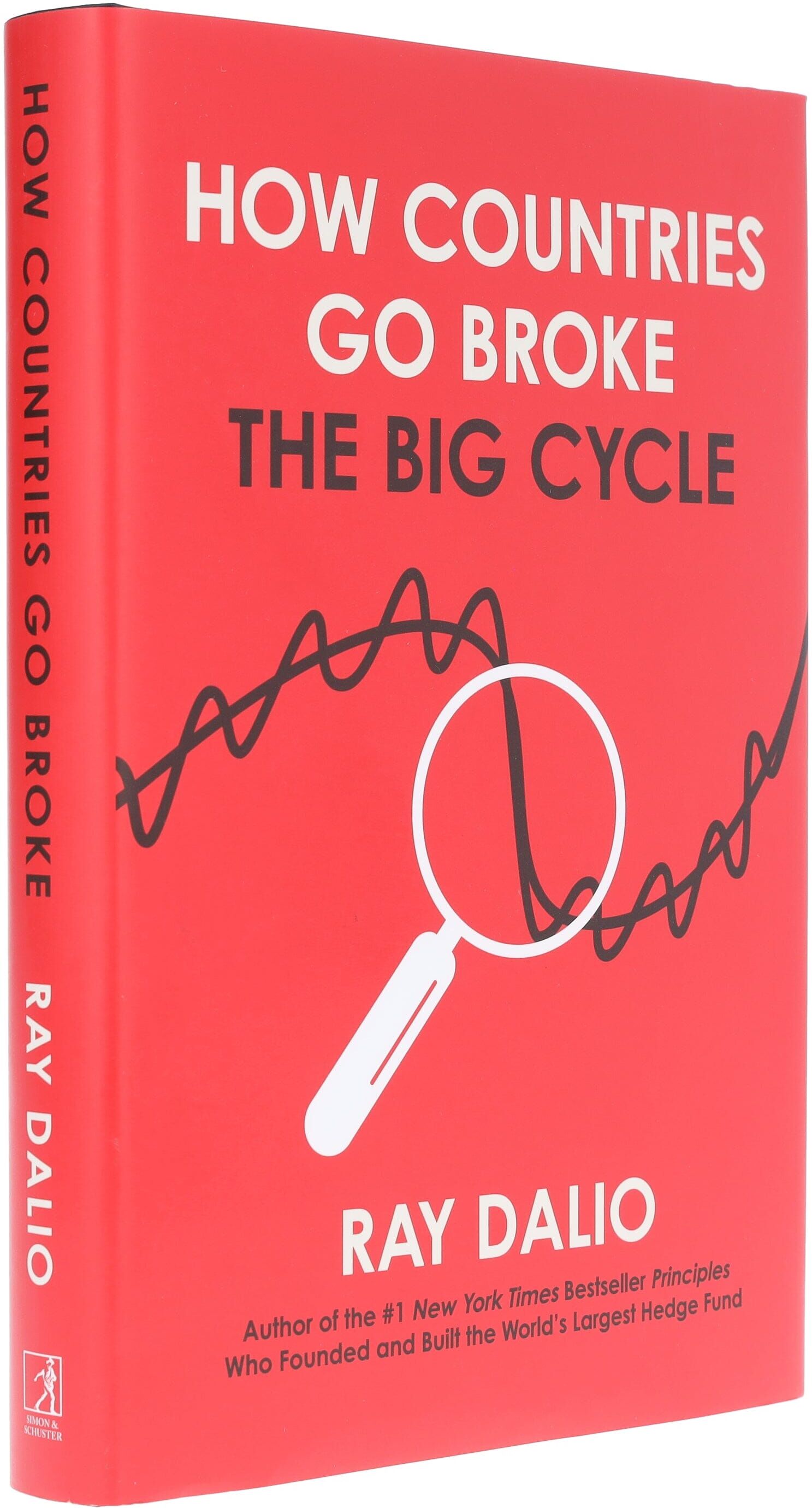
Simon and Schuster UK How Countries Go Broke: Principles for Navigating the Big Debt Cycle, Where We Are Headed, and What We Should DoAn urgent warning about the global economy from Ray Dalio, the #1 New York Times bestselling author of Principles. Do big government debts threaten our collective well-being? Are there limits to debt growth? Can a big, important reserve currency country like the United States really go broke – and what would that look like? For decades, politicians, policymakers and investors have debated these questions, but the answers have eluded them. In this groundbreaking book, Ray Dalio, one of the greatest investors of our time who anticipated the 2008 global financial crisis and the 2010–12 European debt crisis, shares for the first time his detailed explanation of what he calls the 'Big Debt Cycle'. Understanding this cycle is critical for helping policymakers, investors and the general public grasp where we are and where we are headed with the debt issue. Dalio's model points toward surprisingly straightforward solutions for dealing with the debt problems that the US, Europe, Japan and China face today. How Countries Go Broke also shows how these debt problems are related to the other forces – political within countries, geopolitical between countries, natural (droughts, floods and pandemics) and technological (most importantly, AI) – that together are causing what Dalio calls the 'Overall Big Cycle' changes in the world order. By reading this book, you will improve your understanding of what's happening now and what to do about it.17,99 £*Shipping: 2,99 £Secure redirect to the provider
-
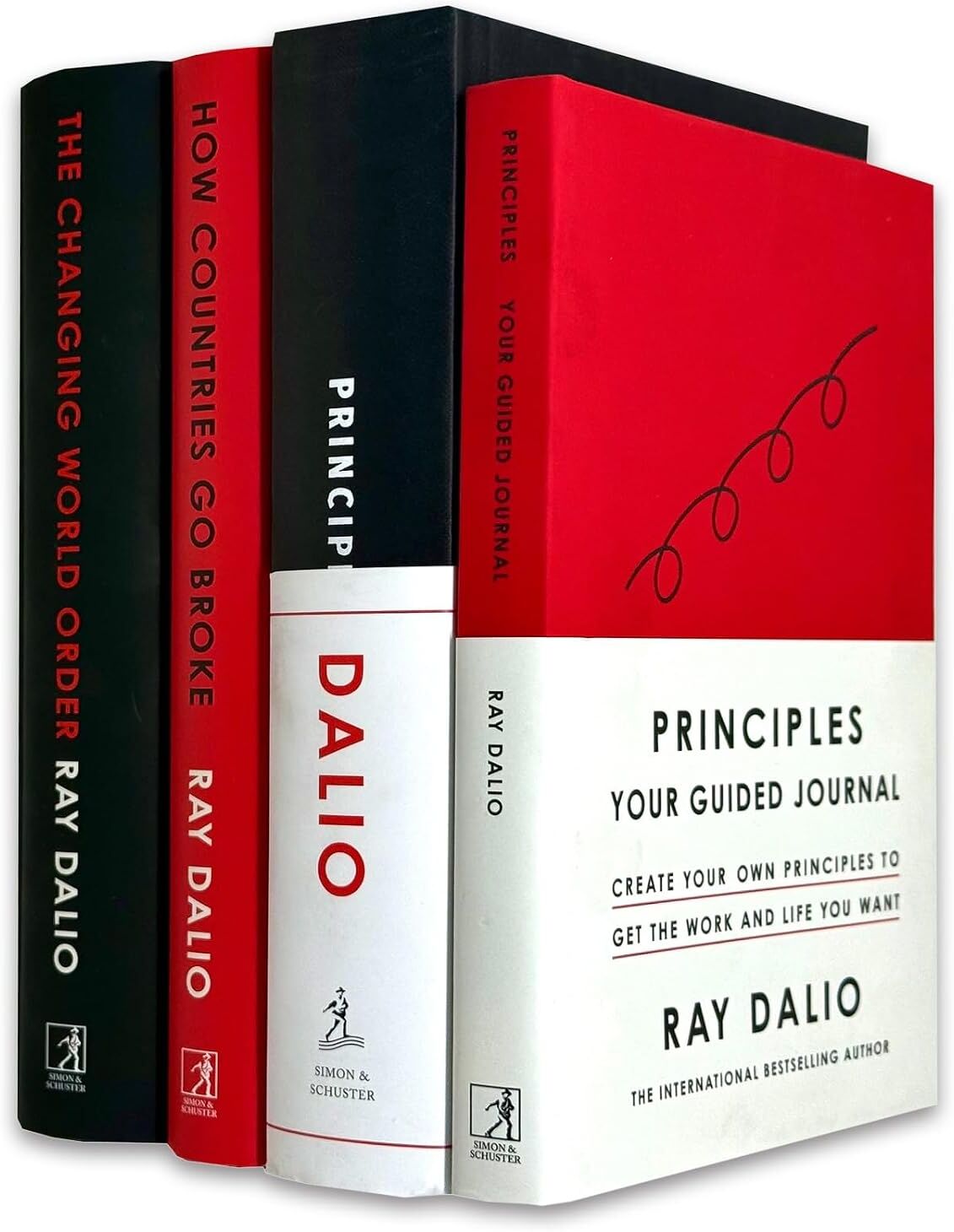
Ray Dalio Collection (Principles: Life and Work, The Changing World Order, How Countries Go Broke & Guided Journal) 4 Books Set - Non Fiction - Hardback Simon & SchusterTitles in this Set: 1. Principles: Life and Work 2. Principles for Dealing with the Changing World Order 3. How Countries Go Broke: The Big Cycle 4. Principles: Your Guided Journal Description: Principles: Life and Work In 1975, Ray Dalio founded an investment firm, Bridgewater Associates, out of his two-bedroom apartment in New York City. Forty years later, Bridgewater has made more money for its clients than any other hedge fund in history and grown into the fifth most important private company in the United States, according to Fortune magazine. Dalio himself has been named to Time magazine’s list of the 100 most influential people in the world. Along the way, Dalio discovered a set of unique principles that have led to Bridgewater’s exceptionally effective culture, which he describes as “an idea meritocracy that strives to achieve meaningful work and meaningful relationships through radical transparency.” It is these principles, and not anything special about Dalio—who grew up an ordinary kid in a middle-class Long Island neighborhood—that he believes are the reason behind his success. In Principles, Dalio shares what he’s learned over the course of his remarkable career. He argues that life, management, economics, and investing can all be systemized into rules and understood like machines. The book’s hundreds of practical lessons, which are built around his cornerstones of “radical truth” and “radical transparency,” include Dalio laying out the most effective ways for individuals and organizations to make decisions, approach challenges, and build strong teams. He also describes the innovative tools the firm uses to bring an idea meritocracy to life, such as creating “baseball cards” for all employees that distill their strengths and weaknesses, and employing computerized decision-making systems to make believability-weighted decisions. While the book brims with novel ideas for organizations and institutions, Principles also offers a clear, straightforward approach to decision-making that Dalio believes anyone can apply, no matter what they’re seeking to achieve. Principles for Dealing with the Changing World Order A few years ago, Ray Dalio noticed a confluence of political and economic conditions he hadn’t encountered before. They included huge debts and zero or near-zero interest rates that led to massive printing of money in the world’s three major reserve currencies; big political and social conflicts within countries, especially the US, due to the largest wealth, political and values disparities in more than 100 years; and the rising of a world power (China) to challenge the existing world power (US) and the existing world order. The last time that this confluence occurred was between 1930 and 1945. This realisation sent Dalio on a search for the repeating patterns and cause/effect relationships underlying all major changes in wealth and power over the last 500 years. In this remarkable and timely addition to his Principles series,...35,99 £*Shipping: 0,00 £Secure redirect to the provider
-
How Countries Go Broke Principles for Navigating the Big Debt Cycle, Where We Are Headed, and What We Should Do by Ray Dalio - Non Fiction - Hardback Simon & SchusterDo big government debts threaten our collective well-being? Are there limits to debt growth? Can a big, important reserve currency country like the United States really go broke – and what would that look like? For decades, politicians, policymakers and investors have debated these questions, but the answers have eluded them. In this groundbreaking book, Ray Dalio, one of the greatest investors of our time who anticipated the 2008 global financial crisis and the 2010–12 European debt crisis, shares for the first time his detailed explanation of what he calls the 'Big Debt Cycle'. Understanding this cycle is critical for helping policymakers, investors and the general public grasp where we are and where we are headed with the debt issue. Dalio's model points toward surprisingly straightforward solutions for dealing with the debt problems that the US, Europe, Japan and China face today. How Countries Go Broke also shows how these debt problems are related to the other forces – political within countries, geopolitical between countries, natural (droughts, floods and pandemics) and technological (most importantly, AI) – that together are causing what Dalio calls the 'Overall Big Cycle' changes in the world order. By reading this book, you will improve your understanding of what's happening now and what to do about it.15,99 £*Shipping: 2,99 £Secure redirect to the provider
-
Simon & Schuster The Lords of Easy Money : How the Federal Reserve Broke the American Economy by Christopher LeonardIf you asked most people what forces led to today’s unprecedented income inequality and financial crashes, no one would say the Federal Reserve. For most of its history, the Fed has enjoyed the fawning adoration of the press. When the economy grew, it was credited to the Fed. When the economy imploded in 2008, the Fed got credit for rescuing us.But the Fed also has a unique power to reshape the American economy for the worse, which it did, fatefully, on November 4, 2010 through a radical intervention called quantitative easing. In just a few short years, the Fed more than quadrupled the money supply with one goal: to encourage banks and other investors to extend more risky debt. Leaders at the Fed knew that they were undertaking a bold experiment that would produce few real jobs, with long-term risks that were hard to measure. But the Fed proceeded anyway...and then found itself trapped. Once it printed all that money, there was no way to withdraw it from circulation. The Fed tried several times, only to see market start to crash, at which point the Fed turned the money spigot back on. That’s what it did when COVID hit, printing 300 years’ worth of money in two short months.Which brings us to now: Ten years on, the gap between the rich and poor has grown dramatically, stock prices are trading far above what’s justified by actual corporate profits, corporate debt in America is at an all-time high, and this debt is being traded by big banks on Wall Street, leaving them vulnerable—just as they were during the mortgage boom. Middle-class wages have barely budged in a decade, and consumers are buried under credit card debt, car loan debt, and student debt.The Lords of Easy Money tells the shocking, riveting tale of how quantitative easing is imperiling the American economy through the story of the one man who tried to warn us. This will be the first inside story of how we really got here—and why we face a frightening future.4,99 £*Shipping: 1,99 £Secure redirect to the provider
-
Which countries have a free market economy?
Some countries that have a free market economy include the United States, Canada, Australia, and the United Kingdom. These countries have minimal government intervention in their economies, allowing for private ownership of businesses and resources, as well as free trade and competition. In a free market economy, prices are determined by supply and demand, and individuals have the freedom to make their own economic choices. **
-
In which countries is there a social market economy? In which countries is there a free market economy? In which countries is there a planned economy?
Countries that have a social market economy include Germany, Sweden, and the Netherlands. These countries combine elements of both capitalism and socialism to ensure social welfare and economic stability. Countries that have a free market economy include the United States, Singapore, and Hong Kong. In these countries, the government plays a minimal role in regulating the economy, allowing market forces to determine prices, production, and distribution of goods and services. Countries that have a planned economy include North Korea, Cuba, and Venezuela. In these countries, the government controls all aspects of the economy, including production, distribution, and pricing of goods and services. **
-
Why is it called "go woke go broke"?
The phrase "go woke go broke" is used to suggest that companies or individuals who embrace progressive or social justice causes will suffer negative financial consequences as a result. The term "woke" refers to being aware of social and political issues, often associated with progressive or liberal viewpoints. The phrase implies that by aligning with these causes, a company or individual will lose customers or face financial hardship. It is often used by critics of social justice movements to dismiss or discredit their impact. **
-
In which countries is there a social market economy in all EU countries?
A social market economy is a model that combines a free-market capitalist system with social policies to ensure fair competition and social welfare. This model is prevalent in all European Union (EU) countries, as it is a key principle of the EU's economic policies. Therefore, all EU countries can be considered to have a social market economy to varying degrees, with each country implementing its own specific policies and regulations to balance economic growth with social welfare. **
Similar search terms for How-Countries-Go-Broke
-
Simon & Schuster UK The Lords of Easy Money: How the Federal Reserve Broke the American Economy by Christopher Leonard - New Paperback - Business & EconomicsInvestigative journalist Christopher Leonard examines the Federal Reserve's monetary experiments in 'The Lords of Easy Money'. This non-fiction paperback explores how the Fed's policies have reshaped the American economy, widening inequality and inflating asset bubbles. Leonard's account, told through the eyes of an insider who tried to sound the alarm, provides essential reading for understanding today's economic instability. The book delves into the Fed's use of quantitative easing from the 2008 crash through the COVID-19 pandemic, revealing the unintended consequences of this policy. Published by Simon & Schuster UK, this book is a thought-provoking analysis of the American economy and its future.3,99 £*Shipping: 2,99 £Secure redirect to the provider
-
Harvard Business Review Press Blue Ocean Strategy, Expanded Edition: How to Create Uncontested Market Space and Make the Competition IrrelevantThe global phenomenon that has sold over 4 million copies, is published in a record-breaking 49 languages and is a bestseller across five continents—now updated and expanded with new content. Named by Fast Company as one of the most influential leadership books in its Leadership Hall of Fame. A strategy classic. In this perennial bestseller, embraced by organizations and industries worldwide, globally preeminent management thinkers W. Chan Kim and Renée Mauborgne challenge everything you thought you knew about the requirements for strategic success. Recognized as one of the most iconic and impactful strategy books ever written, BLUE OCEAN STRATEGY, now updated with fresh content from the authors, argues that cutthroat competition results in nothing but a bloody red ocean of rivals fighting over a shrinking profit pool. Based on a study of 150 strategic moves (spanning more than 100 years across 30 industries), the authors argue that lasting success comes not from battling competitors but from creating "blue oceans"—untapped new market spaces ripe for growth. BLUE OCEAN STRATEGY presents a systematic approach to making the competition irrelevant and outlines principles and tools any organization can use to create and capture their own blue oceans. This expanded edition includes: A new preface by the authors: Help! My Ocean Is Turning Red Updates on all cases and examples in the book, bringing their stories up to the present time Two new chapters and an expanded third one—Alignment, Renewal, and Red Ocean Traps—that address the most pressing questions readers have asked over the past 10 years A landmark work that upends traditional thinking about strategy, this bestselling book charts a bold new path to winning the future. Consider this your guide to creating uncontested market space—and making the competition irrelevant. To learn more about the power of BLUE OCEAN STRATEGY, visit blueoceanstrategy.com. There you'll find all the resources you need—from ideas in practice and cases from government and private industry, to teaching materials, mobile apps, real-time updates, and tips and tools to help you make your blue ocean journey a success.14,99 £*Shipping: 2,99 £Secure redirect to the provider
-
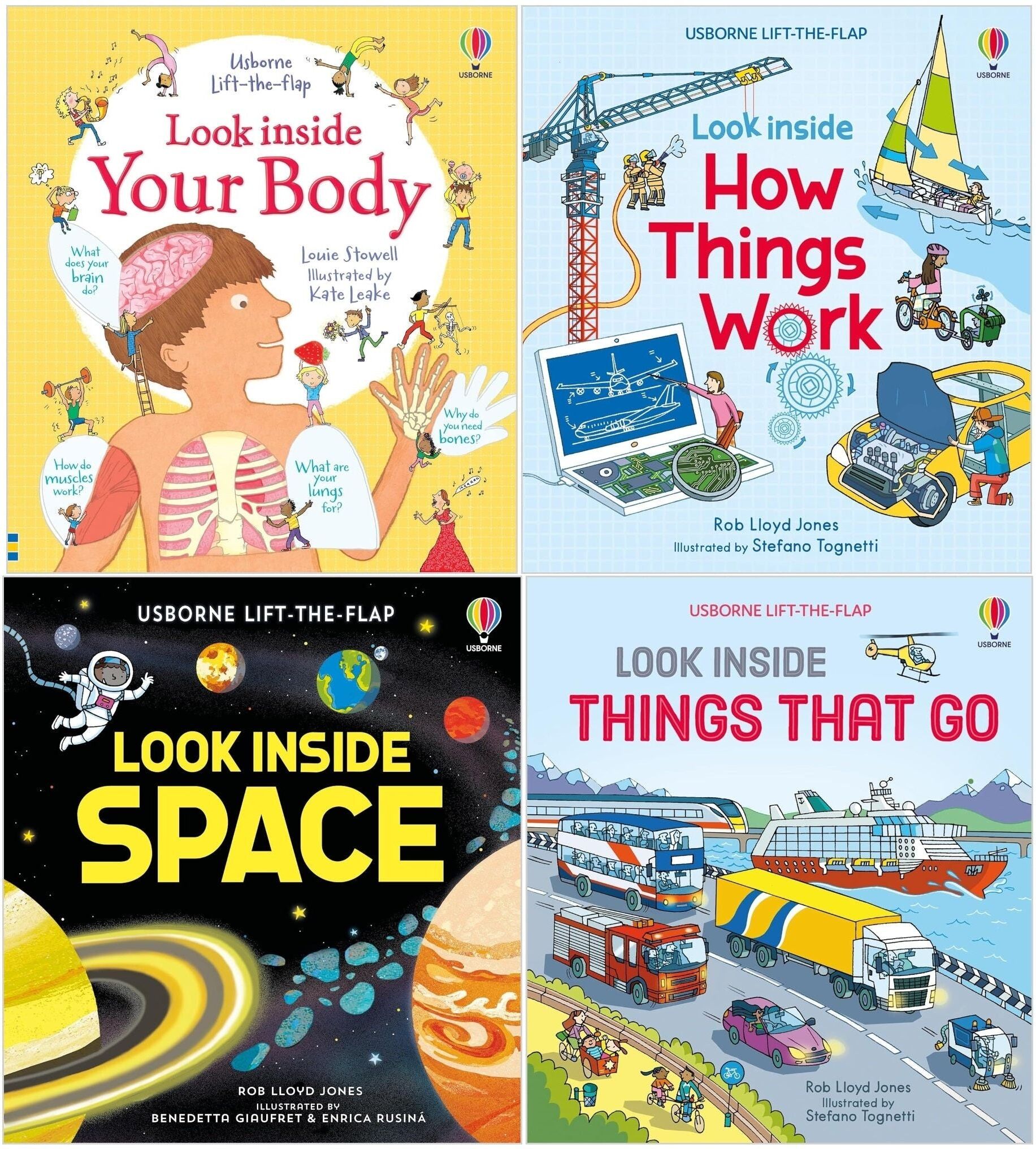
Usborne Lift-The-Flap Look Inside Series 4 Books Set (Your Body, Space, Things That Go, How Things Work)Look Inside Your Body From brains and blood to senses and skin - children will love exploring the ins-and-outs of the human body with this fantastic interactive book. Young readers' minds will boggle as they learn about how their brains work, what happens when they eat, how their lungs use oxygen and much more. Full of surprises to keep enquiring minds entertained, including flaps beneath flaps and a cheeky peek inside a toilet cubicle. Look Inside Space Why do stars shine? And how was the moon made? Children can blast off into space with this fantastic interactive flap book revealing the secrets of the Universe. Vibrant illustrations and simple explanations combined with over 70 flaps to lift. Each double page covers a different topic, including 'Glittering galaxies', 'On the Moon' and 'Space Station'. Look Inside Things That Go Lift the flaps to explore all sorts of exciting vehicles - bulldozers rumbling around building sites, fire engines rushing to emergencies, and jumbo jets soaring into the skies. With fascinating facts about every vehicle, from speed machines to giant trucks, emergency vehicles, tractors, and planes all geared to delight enquiring minds. The colourful scenes are covered with flaps, each packed with even more detail to entertain young readers. Look Inside How Things Work Have you ever wondered how cars roar along roads, or planes soar into the sky? Discover how all sorts of amazing things work, from fire engines and submarines to dishwashers and vacuum cleaners, in this exciting introduction to engineering for young children, with over 70 flaps to lift. Includes links to carefully selected websites to find out more.16,99 £*Shipping: 2,99 £Secure redirect to the provider
-
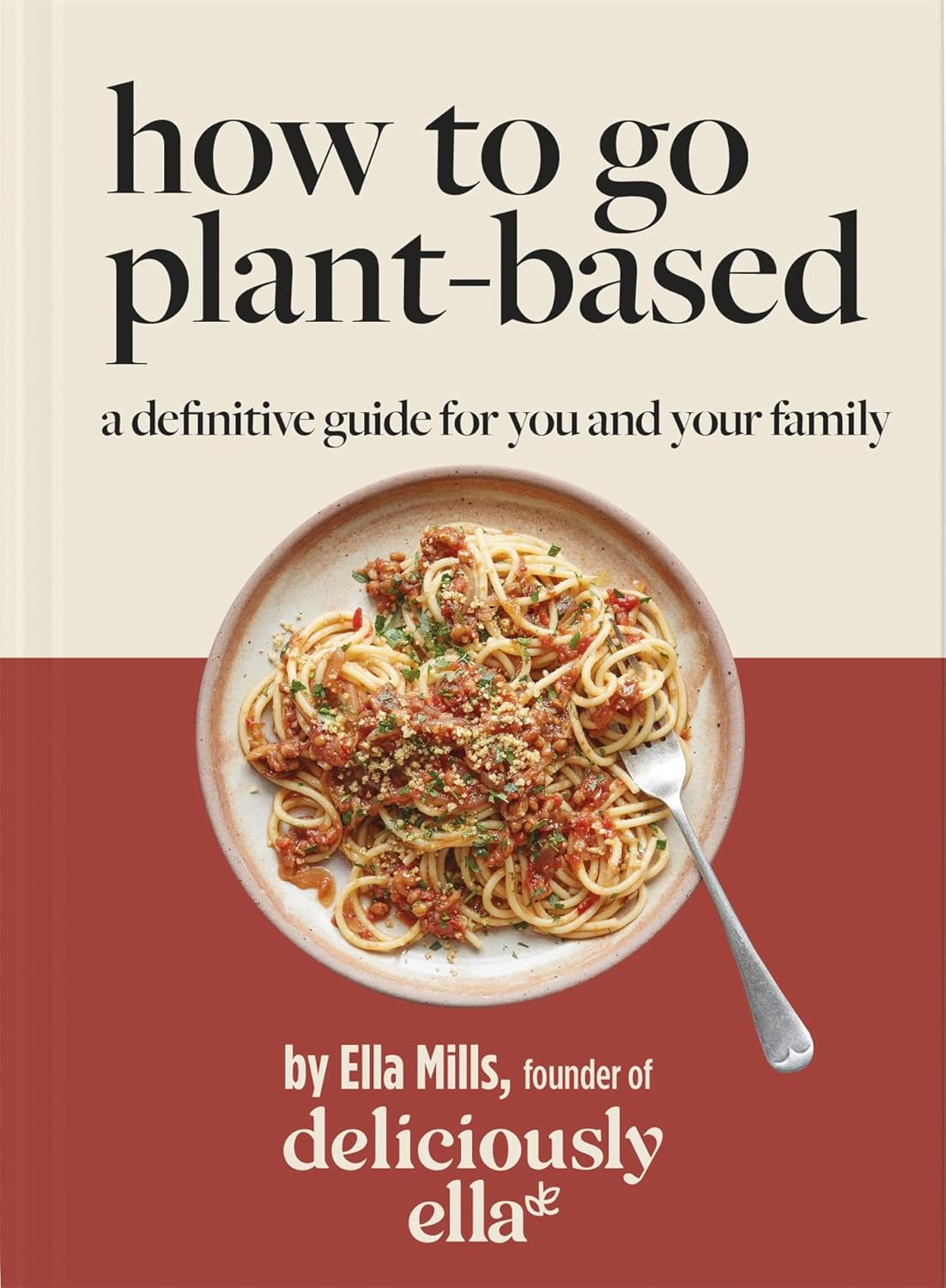
Yellow Kite Deliciously Ella How To Go Plant-Based by Ella Mills - Hardback - 100 Family Recipes - Plant-Based Cookbook GiftDeliciously Ella How To Go Plant-Based is a comprehensive guide to building balanced, plant-based meals. Written by bestselling author Ella Mills, this hardback book combines 100 new recipes with clear advice on nutrition, shopping, and meal planning. It's designed for busy families, curious cooks, and anyone looking to eat more plants, whether you're fully vegan, flexitarian, or just want to add more vegetables to your diet. The book answers the question of how to go plant-based day-to-day without it becoming complicated or expensive, drawing on years of research, testing, and conversations with doctors and nutritionists. Yellow Kite published this definitive guide, which strips away the confusion and provides practical advice for building healthy, plant-based meals that everyone will enjoy.4,99 £*Shipping: 2,99 £Secure redirect to the provider
-
How do you go from backlink analysis to SEO strategy?
After conducting a backlink analysis, the next step is to identify the high-quality and relevant backlinks that are contributing to the website's authority and rankings. Once these backlinks are identified, the SEO strategy can be tailored to focus on acquiring similar high-quality backlinks from authoritative and relevant websites. This may involve outreach to relevant websites for guest posting opportunities, creating valuable content that naturally attracts backlinks, and optimizing the website's internal linking structure to maximize the impact of existing backlinks. Additionally, the SEO strategy may also involve disavowing low-quality or spammy backlinks that could be harming the website's rankings. **
-
In how many countries is factory farming banned, or in which countries is factory farming banned?
Factory farming is banned in several countries around the world, including Austria, Germany, Switzerland, and Sweden in Europe. Additionally, New Zealand and some states in Australia have also implemented bans or restrictions on factory farming practices. These countries have taken steps to improve animal welfare and reduce the negative environmental impacts associated with intensive farming methods. However, it's important to note that the specific regulations and restrictions on factory farming can vary by country and region. **
-
In how many countries is factory farming prohibited or in which countries is factory farming prohibited?
Factory farming is prohibited in several countries around the world, including Austria, Denmark, Germany, Sweden, Switzerland, and the Netherlands. These countries have implemented laws and regulations to restrict or ban certain intensive farming practices in order to improve animal welfare standards. Additionally, some regions within countries like the United States and Australia have also implemented restrictions on factory farming practices. **
-
Where does society go when Europe's economy has completely failed, and which countries are good emigration countries in the future?
When Europe's economy has completely failed, society may face significant challenges such as high unemployment, poverty, and social unrest. In such a scenario, individuals may consider emigrating to countries with stable economies and better opportunities for employment and quality of life. Countries like Canada, Australia, New Zealand, and the United States are often considered good emigration options due to their strong economies, diverse job markets, and high standards of living. These countries also have well-established immigration systems that welcome skilled workers and professionals from around the world. **
* All prices are inclusive of VAT and, if applicable, plus shipping costs. The offer information is based on the details provided by the respective shop and is updated through automated processes. Real-time updates do not occur, so deviations can occur in individual cases. ** Note: Parts of this content were created by AI.